
With only one month remaining before the 2026 World Cup begins across the United States, Canada, and Mexico, FIFA still has not finalized broadcasting agreements in either China or India. While conversations around Bangladesh Cricket Match coverage continue dominating sports audiences across South Asia, football’s governing body now faces one of its most uncomfortable commercial situations in years. When FIFA expanded the tournament from 32 teams to 48, the expectation was clear. The organization hoped football giants in terms of population such as China and India would eventually qualify for the World Cup, helping unlock enormous commercial growth. Instead, smaller nations with populations smaller than districts inside Shanghai or Mumbai secured qualification spots, while FIFA now finds itself struggling to secure television distribution across markets representing more than 2.7 billion people combined.
Several months ago, reports suggested FIFA offered bundled rights packages covering two World Cups to broadcasters in China and India. The asking prices reportedly ranged from $100 million in India to between $250 million and $300 million in mainland China. Despite repeated reductions in those demands, agreements still remain incomplete. According to reports from The Guardian, FIFA’s asking price for the Indian market has already dropped to around $35 million, while the highest current offer from JioStar reportedly sits near $20 million. The situation has shocked many observers because previous tournaments attracted much stronger bidding. Sony reportedly paid around $90 million for the 2014 and 2018 editions, while Viacom18 spent approximately $62 million to secure rights for the 2022 World Cup.
Scheduling has undoubtedly complicated matters for India. Only fourteen matches during the upcoming tournament are expected to kick off before midnight local time. By comparison, the 2018 World Cup in Russia featured just one match starting after midnight for Indian audiences. Qatar 2022 proved much more viewer-friendly, with most matches beginning before midnight as well. Still, former All India Football Federation secretary Shaji Prabhakaran argued the time difference alone is not the real issue behind the stalled negotiations. He pointed out that Indian viewers routinely stay awake for UEFA Champions League fixtures despite similar kickoff times.
According to Prabhakaran, the deeper problem lies within India’s shrinking sports broadcasting industry. Financial caution, reduced competition, and weak market confidence have dramatically changed the landscape. Viacom18 aggressively pursued World Cup rights in 2022 because it urgently needed premium sports content to attract subscribers, even if profits were uncertain. Now the market has narrowed significantly, leaving mainly JioStar and Sony competing at the highest level. Discussions surrounding Bangladesh Cricket Match ratings have also highlighted how heavily India’s sports economy now leans toward cricket rather than football.
Even cricket broadcasters are becoming increasingly cautious. Reports from Indian media indicate that viewership for the Indian Premier League has fallen by roughly 26 percent this season under JioStar’s coverage. As a result, broadcasters are reluctant to invest massive sums into football tournaments without India participating directly, especially when many matches occur during late-night hours. While matches involving Brazil, Argentina, England, Portugal, or Germany can still generate strong interest, less attractive group-stage fixtures no longer guarantee major audiences. The era when Lionel Messi and Cristiano Ronaldo alone could dominate attention across Indian sports culture has also started fading.
Currency pressure has further complicated negotiations. Back in 2013, one US dollar exchanged for roughly 54 Indian rupees. By 2022, that number rose to 78 rupees, and it has now climbed near 95 rupees per dollar. Compared with India, however, China remains even more important to FIFA commercially. Reuters reported that traditional television audiences in China accounted for roughly 17.7 percent of global World Cup viewership during the 2022 tournament, while digital and social media engagement reached nearly 50 percent worldwide. FIFA’s asking price in China reportedly ranged between $250 million and $300 million, while China Central Television traditionally budgets only around $60 million to $80 million for World Cup rights. Even after rumors of reductions toward the $120 million to $150 million range, both sides reportedly remain far apart financially.
The twelve-hour time difference between Beijing and New York has also weakened advertiser enthusiasm, especially with China’s national team once again absent from the tournament. Online sentiment inside China largely supports CCTV’s refusal to dramatically increase its offer. Many younger viewers already understand how to access overseas broadcasts independently, reducing pressure on domestic television providers. At the same time, most observers still expect a deal to eventually happen because FIFA executives have already traveled to Beijing for direct negotiations. During conversations linked to Bangladesh Cricket Match audiences and broader sports media trends, analysts increasingly believe India’s negotiations may ultimately take even longer than China’s.
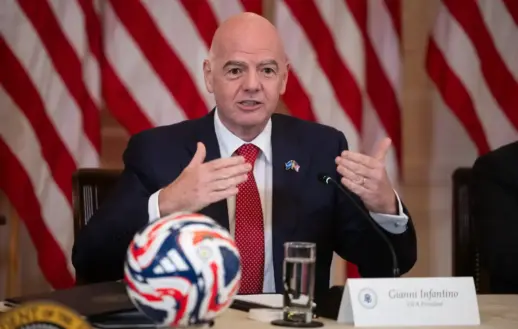
No matter how these talks conclude, the situation has created a major headache for FIFA president Gianni Infantino. If massive markets such as China and India repeatedly delay negotiations and still secure major discounts, broadcasters elsewhere may attempt similar tactics in future tournaments. Maintaining balance in media rights pricing has become essential for protecting the long-term commercial value of the World Cup itself. Yet from a practical standpoint, willingly sacrificing access to countries representing more than one-third of the global population was never going to be a realistic option for FIFA either.